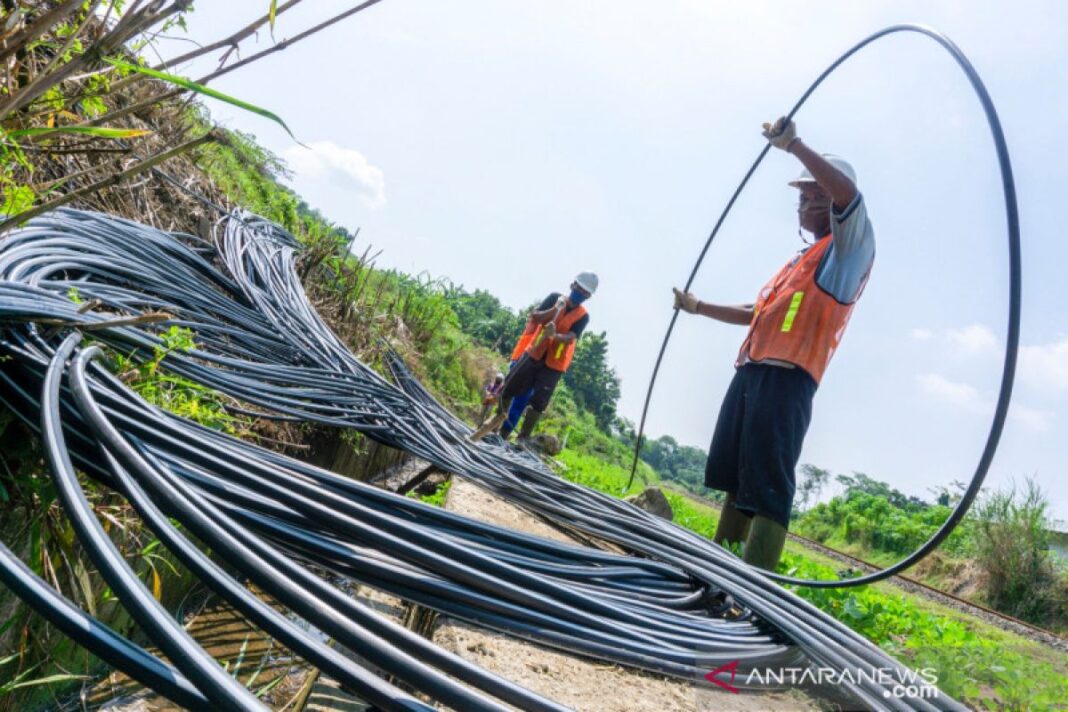

The Communication and Digital Ministry has outlined a comprehensive strategy to expand the nation’s digital infrastructure by 2029. The plan prioritizes widespread fiberization and the adoption of open access principles, according to Mulyadi, the ministry’s director of digital infrastructure acceleration, who spoke on Thursday.
A central component of the strategy is the significant expansion of fiber optic networks. Coverage across sub-districts is projected to reach 90 percent by 2029, a substantial increase from the 72.5 percent estimated for 2025. This initiative is expected to boost fixed broadband penetration to 50 percent by 2029, up from 20.83 percent in 2025.
Furthermore, average fixed broadband speeds are targeted to reach 100 Mbps by 2029, compared to 32.1 Mbps in 2025. Mulyadi emphasized the critical role of fiber optic networks, stating they are essential for delivering sustainable fixed and mobile broadband services, particularly for 5G backhaul.
A second key strategy involves the systematic structuring of both passive and active digital infrastructure. This includes integrated utility networks, shared poles, and various supporting facilities. The Association of Telecommunication Network Providers (APJATEL) is seen as crucial in managing shared infrastructure, aiming to enhance cost transparency and promote healthier industry competition.
The government is also working to standardize regional regulations to ensure local infrastructure development aligns with national objectives. Concurrently, the ministry is advocating for open access principles to broaden connectivity.
Open access involves separating the physical network infrastructure from service providers, enabling more entities to utilize the same infrastructure and expand their offerings. Mulyadi highlighted that by fostering fair, transparent, and non-discriminatory access to passive infrastructure, the ministry anticipates reducing operational costs and intensifying market competition.
Source: Original