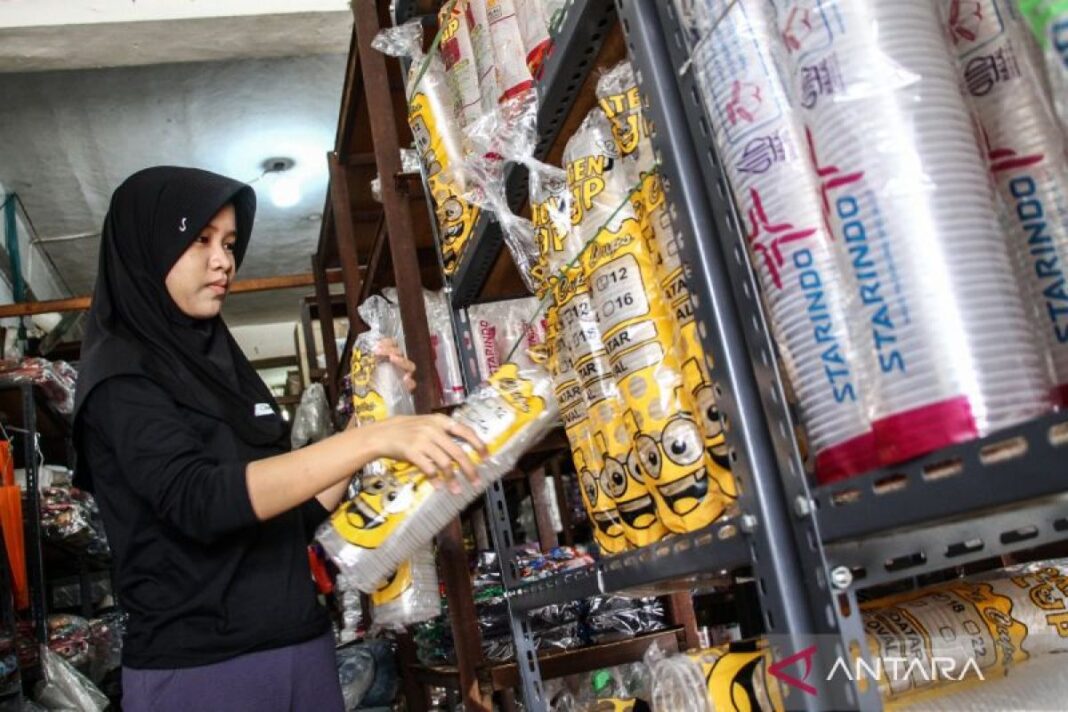

Indonesia has secured alternative naphtha supplies from India, Africa, and the United States to counter potential disruptions stemming from the ongoing Middle East conflict. This measure was confirmed by Micro, Small, and Medium Enterprises (MSME) Minister Maman Abdurrahman during a press briefing on Thursday, stating the procurement process is currently underway. The Ministry of Trade is actively implementing follow-up actions to guarantee the consistent availability of naphtha, a crucial raw material for plastic manufacturing.
Beyond immediate supply stabilization, the government is developing long-term strategies aimed at lessening its dependency on naphtha. These initiatives include exploring sustainable alternative raw materials such as seaweed and cassava. While scientists have identified seaweed as a viable substitute for plastic bags, its current production costs remain high due to limited market penetration. To address this, the government is collaborating with MSMEs involved in seaweed-based plastic bag production to scale up industrial capacity and drive down costs.
The conflict involving the United States, Israel, and Iran has significantly impacted the global market, despite a recent ceasefire between Washington and Tehran. Domestic plastic product prices in Indonesia have escalated by 30 to 80 percent amid these international tensions. The situation has led to a blockade of the Hormuz Strait, a critical maritime passage that facilitates the shipment of various commodities, including naphtha, and has contributed to an increase in global crude oil prices.
According to data from Independent Commodity Intelligence Services (ICIS), major naphtha suppliers include Saudi Arabia and Oman, which contribute approximately 3.6 million tons and 2.7 million tons annually, respectively. Nearly four million tons of naphtha are transported through the Hormuz Strait to Asian markets each month, highlighting the strategic importance of the waterway and the vulnerability of supply chains to regional instability.
Source: Original