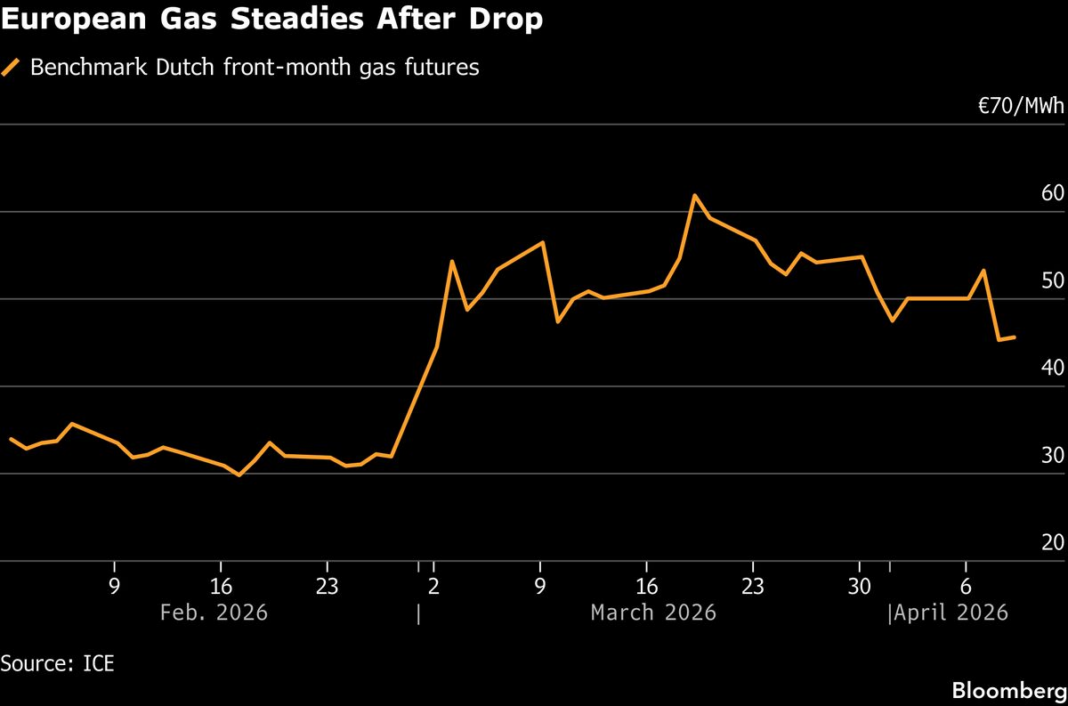

European natural gas benchmarks demonstrated stability this week, holding steady amid persistent geopolitical concerns emanating from the Middle East. This equilibrium emerged as access through the critical Strait of Hormuz continued to be largely restricted, alongside ongoing regional conflicts that threaten a fragile ceasefire agreement reportedly involving the United States and Iran.
The Strait of Hormuz, a vital maritime chokepoint connecting the Persian Gulf with the Arabian Sea and beyond, remains a central focus for global energy markets. A significant portion of the world’s liquefied natural gas (LNG) and crude oil transits this narrow waterway daily. Any sustained impediment or heightened risk to shipping in this area typically triggers heightened market volatility due to its strategic importance to global supply chains.
Concurrently, the broader Middle East region continues to experience various localized conflicts and elevated tensions. These dynamics contribute to an environment of uncertainty, which analysts closely monitor for their potential to disrupt established trade routes and energy infrastructure. The sensitivity of energy markets to such geopolitical developments is a consistent factor in price movements.
Of particular concern is the status of a delicate ceasefire arrangement understood to involve the United States and Iran. The potential unraveling of this agreement could signify an escalation of regional hostilities, potentially intensifying proxy conflicts or direct confrontations. Such an escalation would further jeopardize maritime security and the stability of critical energy-producing and transit nations.
Energy traders and market participants are closely observing these interwoven geopolitical factors, understanding that the combined effect of restricted access through the Strait of Hormuz and the fragility of regional peace agreements has a direct bearing on the perception of supply risk and, consequently, on natural gas prices globally.
Source: Original