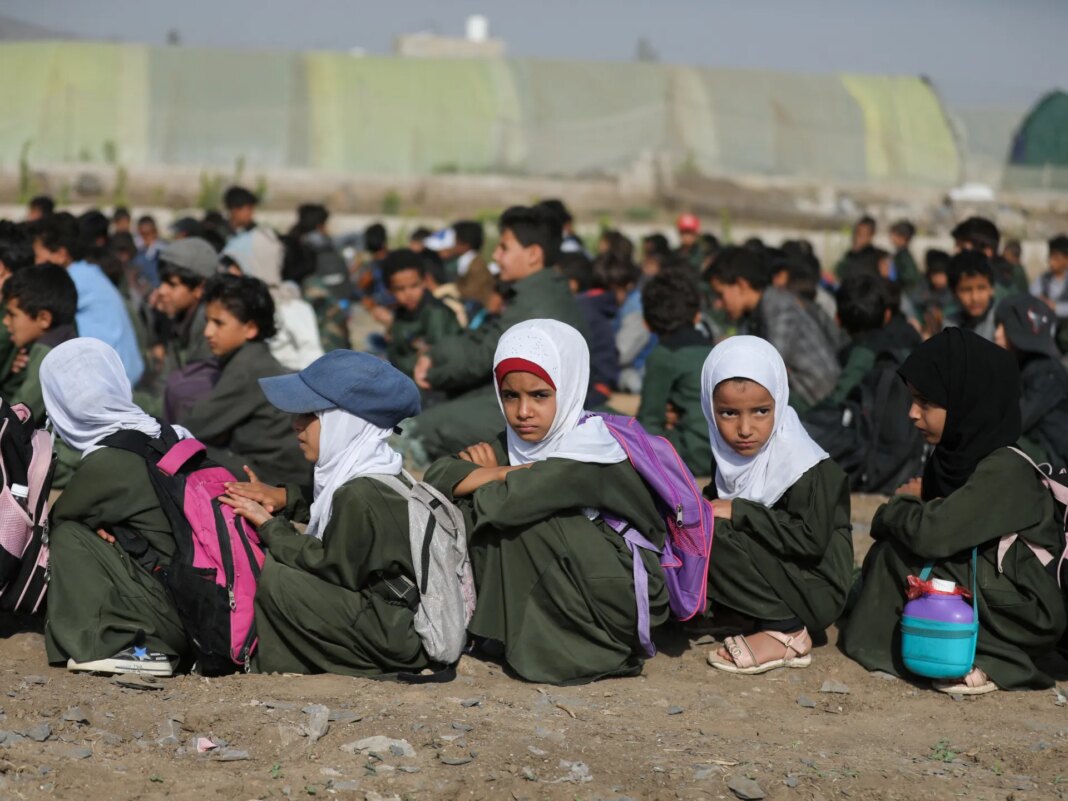

Yemen’s severe economic crisis and protracted conflict are pushing the nation’s public sector, particularly its teachers, to the brink, forcing many to take on multiple jobs to survive. Mohammed Salem, a teacher in Mukalla with over three decades of experience, illustrates this hardship, balancing roles at a government school, a private institution, and a hotel. His monthly earnings have plummeted from the equivalent of $320 to just $130 over the past decade, compelling his family to skip meals and relocate for cheaper housing.
The country’s decade-long conflict has devastated its economy, leading to a drastic devaluation of the Yemeni riyal. Before the war, the currency traded at approximately 215 to the US dollar; it now stands around 1,560 riyals per dollar in government-controlled territories. This economic collapse has crippled vital revenue streams, including oil exports, customs duties, and taxes.
Public sector salaries have become a major point of contention. In Houthi-controlled northern regions, public salaries have largely been suspended since late 2016. Meanwhile, the internationally recognized government, based in Aden, struggles with inconsistent payments, citing dwindling revenues exacerbated by Houthi attacks on oil export terminals. This crisis affects an estimated 193,668 teachers, nearly two-thirds of the national total, who receive no regular pay, according to the UN Office for the Coordination of Humanitarian Affairs.
The dire financial situation has led to immense hardship for educators and their families. Teachers like Mr. Salem have resorted to extreme measures, including foregoing nutritious foods and using natural remedies for sick children due to unaffordable medical costs. One of his children even joined the military instead of attending university, seeking more stable income. Teachers in government-held areas have engaged in protests and strikes, disrupting education, to demand better and consistent wages.
While some local authorities have introduced modest monthly incentives for teachers, these vary significantly by province. Despite these limited efforts, many teachers warn they may be forced to abandon the profession if conditions do not improve. The UN reports that 6.6 million school-aged children are deprived of their right to education, with 2,375 schools damaged or destroyed, underscoring the severe impact on a generation’s future.
Source: Original