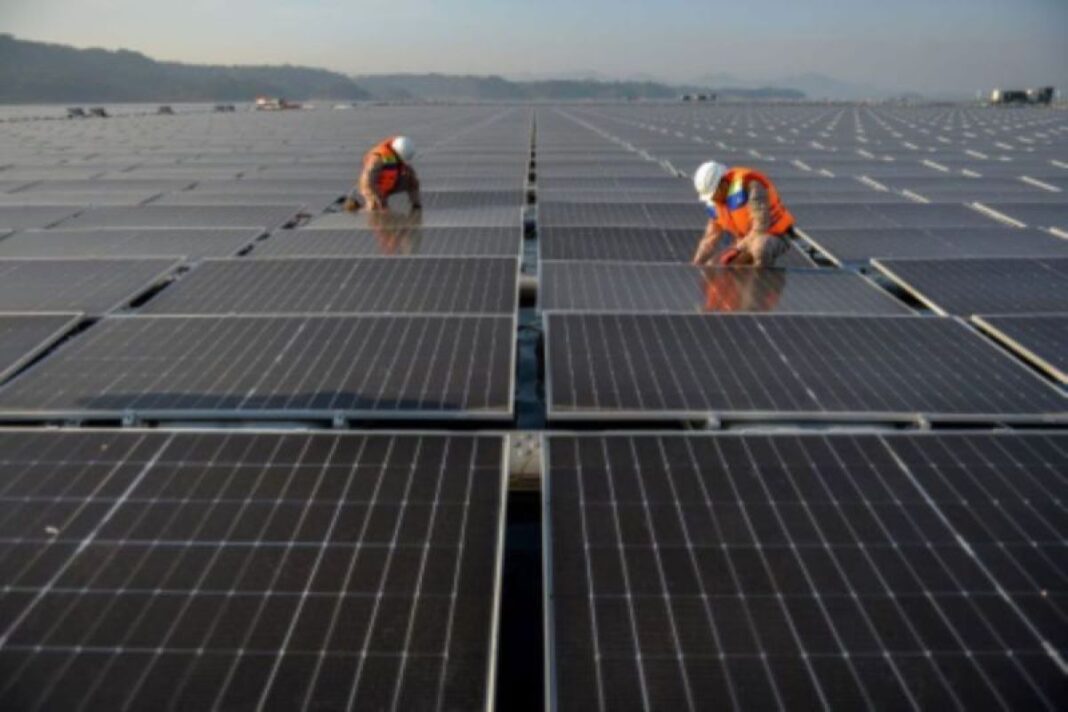

The Indonesian government is advancing its initiative to convert existing diesel power plants (PLTD) into solar power facilities (PLTS). This strategic transformation aims to foster clean energy development while simultaneously strengthening national energy security.
The National Energy Council (DEN) has affirmed that this plan aligns with international policies focused on improving energy security and promoting cleaner energy solutions. Dadan Kusdiana, Secretary-General of DEN, stated in Jakarta on Wednesday that the government is preparing for the gradual decommissioning of PLTD units to accelerate the shift towards renewable energy, with a specific focus on expanding solar power capacity to an ambitious target of 100 gigawatts.
Kusdiana underscored that the transition must be implemented progressively, running concurrently with the completion of new solar energy projects. He also highlighted the strategic importance of optimizing local energy sources, such as geothermal. Many diesel plants are located in remote areas, where fuel supply is often logistically difficult and costly, making them prime candidates for replacement by locally abundant resources like solar and geothermal power.
However, Kusdiana acknowledged that the transition presents inherent challenges, particularly in Indonesia’s underdeveloped, frontier, and outermost regions. He noted that similar efforts were initiated previously through the government’s “de-dieselization” program, which encouraged the use of alternative energy sources like gas and solar power.
President Prabowo Subianto has instructed the acceleration of these power plant conversions. Coordinating Minister for Economic Affairs Airlangga Hartarto indicated that this move is partly a response to rising global oil prices. Energy and Mineral Resources Minister Bahlil Lahadalia further confirmed that the transition will be carried out in stages, ensuring the continuous stability of the nation’s electricity supply.
Source: Original