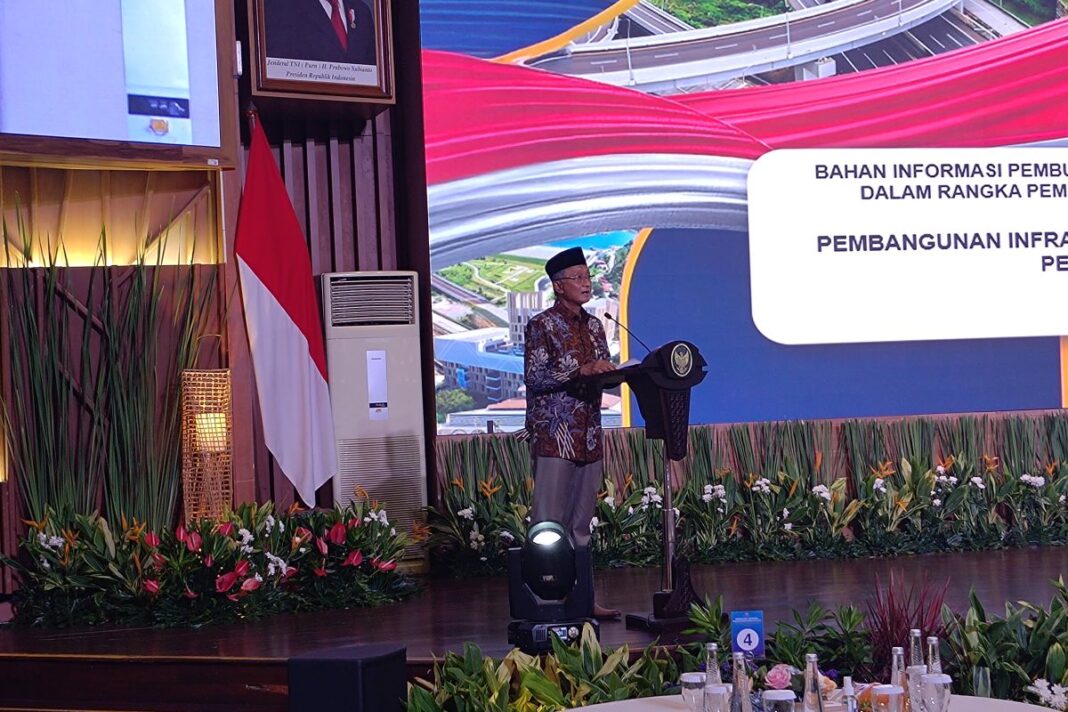

The Ministry of Public Works has outlined its infrastructure development strategy for the 2027 fiscal year, prioritizing initiatives that enhance national self-sufficiency in food, energy, and water. This strategic direction aims to support a broader goal of stimulating economic growth to reach 8 percent.
Public Works Minister Dody Hanggodo highlighted the ministry’s essential role in establishing fundamental infrastructure vital for economic activities and public services, aligning with national priority programs. He detailed the strategic “PU 608” program, which targets three core objectives: achieving an incremental capital output ratio (ICOR) below 6 for investment efficiency, progressing towards zero percent poverty, and boosting economic growth to 8 percent by 2029.
The minister emphasized that the success of these efforts would be measured through national economic indicators, including infrastructure’s direct contribution to productivity gains and job creation. For the year 2026, the ministry is managing a budget of approximately Rp118.5 trillion (nearly US$7 billion) dedicated to implementing several key priority projects.
These 2026 initiatives include the construction of 16,000 hectares of new irrigation networks, continuation of 12 dam projects, and providing raw water at a rate of 2 cubic meters per second. In the connectivity sector, plans involve building 102 kilometers of new roads, improving and preserving 1,500 kilometers of existing roads, and constructing 33 kilometers of toll roads. Furthermore, the housing sector aims to increase drinking water supply capacity by about 800 liters per second and extend sanitation services to 63,000 families. The ministry also plans to construct approximately 900 public schools and rehabilitate 1,000 religious schools as part of its strategic infrastructure efforts.
Looking ahead to 2027, the Ministry of Public Works has set more specific outcome targets. In the water resources sector, goals include increasing water storage capacity to 58.84 cubic meters per capita and improving irrigation reliability by 27 percent. Connectivity targets aim to reduce travel times on major national routes, while the housing sector seeks to achieve 33.46 percent access to safe drinking water and 10.8 percent access to safe sanitation.
Minister Hanggodo underscored that the focus of infrastructure development extends beyond mere physical construction, aiming primarily at enhancing productivity and improving the overall quality of life for the community.
Source: Original