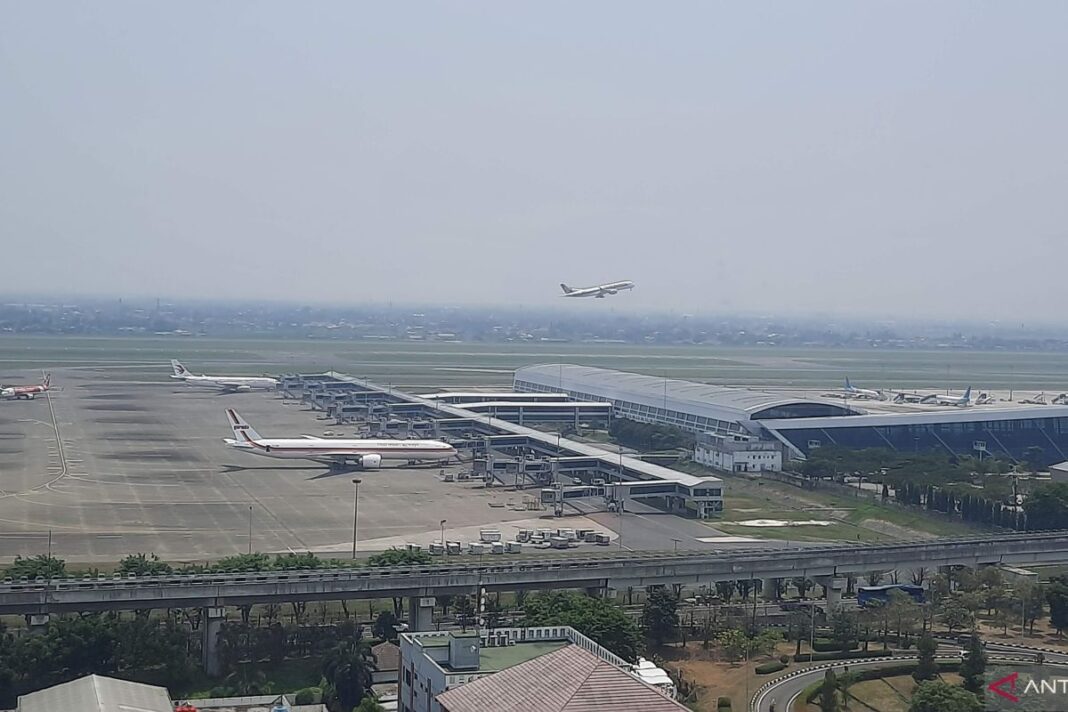

Soekarno-Hatta International Airport in Tangerang experienced flight diversions on Monday due to extreme weather conditions that primarily affected landing procedures. PT Angkasa Pura Indonesia (InJourney Airports), the state-owned operator, confirmed the operational adjustments.
Yudistiawan, Assistant Deputy for Communication and Legal Affairs at PT Angkasa Pura Indonesia for Soekarno-Hatta Airport, stated that heavy rain and the potential for wind shear, or abrupt changes in wind direction, necessitated these diversions. These weather phenomena significantly impacted aircraft movements, particularly during their approach to the runway.
Operational data from the Airport Operation Control Center (AOCC) indicated that 12 flights were redirected to other airports. Additionally, 14 flights entered holding patterns, 13 performed go-around maneuvers, and one aircraft returned to the apron. Airport management underscored that flight safety and security held the highest priority in all operational decision-making.
Authorities at Soekarno-Hatta Airport are maintaining close coordination with AirNav Indonesia, airlines, and other relevant entities. This collaborative effort is crucial for ensuring that flight operations proceed safely, in an organized manner, and remain controlled amidst the unfavorable weather.
The severe weather also caused temporary damage to airport infrastructure. Specifically, the roof of the Boarding Lounge Gate 7 area within Terminal 3 was affected for approximately five minutes. Airport personnel responded promptly to the incident, taking immediate action to clear and secure the location, thereby preventing any long-term impact on passenger services.
Furthermore, Yudistiawan confirmed that all airside facilities, including runways, taxiways, and aprons, remained fully operational and in good condition. No flooding was reported in these critical areas, ensuring unimpeded aircraft movements. Following the incident, the affected area was cleaned, and the overall situation at the airport returned to normal, with operations continuing smoothly under continuous monitoring for any potential disruptions.
Source: Original